Which Products Work Best for WooCommerce Subscriptions?

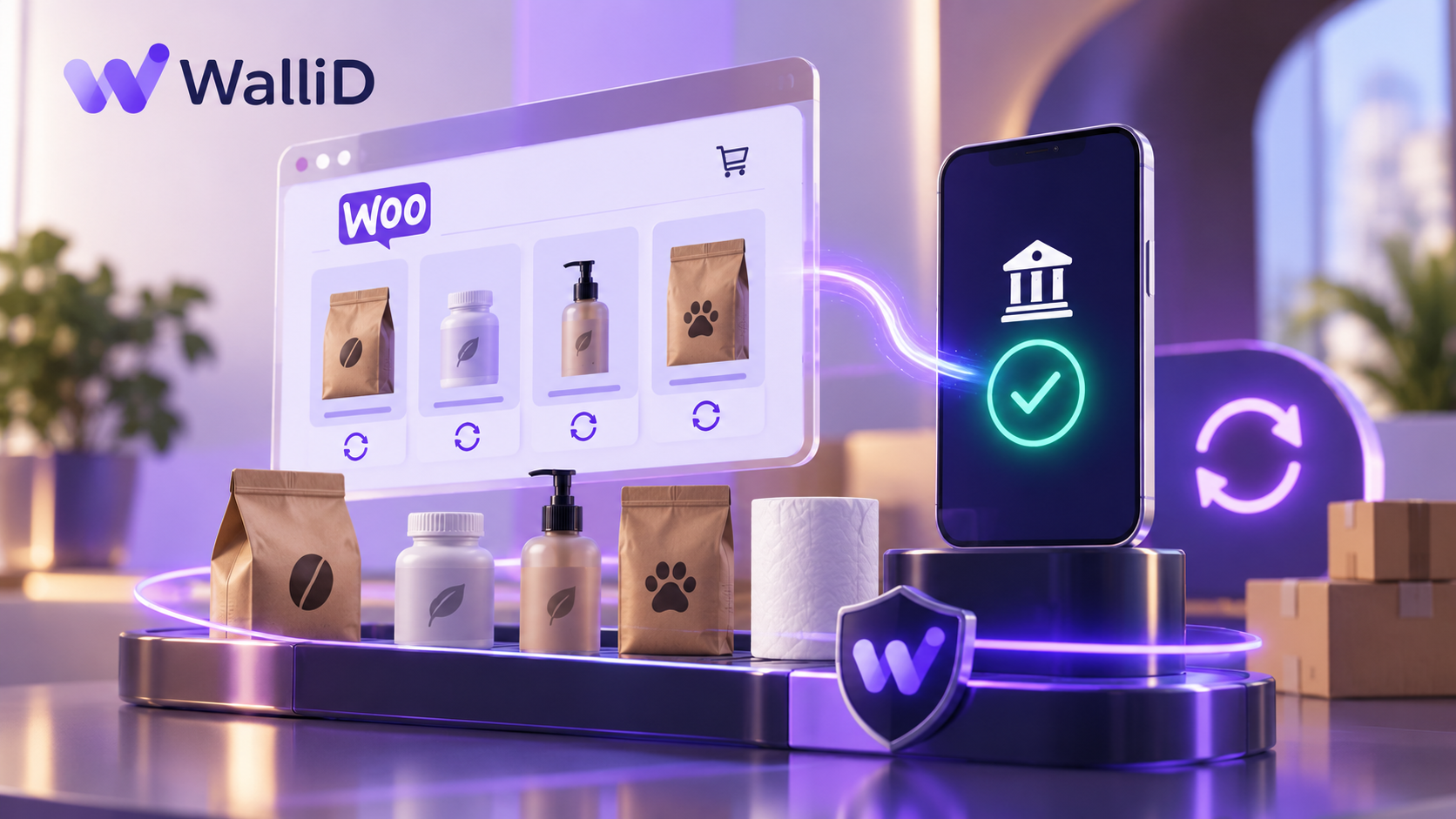
WooCommerce subscription products with Pay by Bank and WalliD
Not every product is equally suited to a subscription model. The strongest candidates usually have a predictable consumption cycle, a clear reason to reorder and enough stability in price, quantity or product selection to make repeat purchasing convenient.

Key Takeaways

  • Products with predictable consumption and regular replenishment are generally easier to structure as WooCommerce subscriptions.
  • Coffee, pet food, beauty products and household consumables can fit subscription models, but the right setup depends on actual customer behaviour.
  • Buy Again suits irregular repeat purchases, while customer-approved and automatic renewals suit ongoing subscription relationships with different payment requirements.
  • Consumption cycle, basket variation, skip or pause needs, stock availability and price changes should be reviewed before choosing a renewal model.
  • Automatic renewal is not automatically the right choice for every consumable product; customer expectations and payment-method capabilities also matter.
  • Pay by Bank can support a customer-approved renewal journey, with each new WalliD renewal payment requiring fresh customer authorisation.
This article is about which products and product categories can work well with WooCommerce subscriptions, and how merchants can choose between a simple repeat purchase, a customer-approved renewal and an automatic renewal model. It focuses on practical product characteristics such as consumption cycle, basket changes, stock risk and the need to skip or pause orders.

Which Products Are a Good Fit for WooCommerce Subscriptions?

The best fit depends less on the product category itself and more on how customers consume and reorder the product.
Product category Typical pattern Basket changes Skip / pause need Stock risk Suitable model
Coffee Regular, predictable consumption Usually low Medium Medium Subscription or customer-approved renewal
Pet food Regular household replenishment Low to medium Medium Medium to high Subscription or customer-approved renewal
Beauty products Replenishment varies by product Medium High Medium Customer-approved renewal or subscription
Household consumables Predictable repeat use Low to medium Medium Medium Subscription or customer-approved renewal
These are practical examples rather than universal rules. A merchant should base the renewal model on actual purchasing behaviour, product availability and operational requirements.

When Does a Simple Repeat Purchase Make More Sense?

A repeat purchase can be better than a subscription when customers reorder at irregular intervals or frequently change what they buy.
This can apply when:
  • customers combine different products on each order;
  • consumption varies significantly between customers;
  • products are seasonal;
  • stock availability changes regularly;
  • customers do not need a predictable delivery schedule.
In these cases, a Buy Again journey lets the customer decide when to purchase without creating an ongoing subscription relationship.

When Does a Customer-Approved Renewal Make Sense?

A customer-approved renewal can work well when the product is replenished regularly but the customer should review each new order before paying.
This model can be useful when the subscription has a predictable cycle but the basket, quantity or price may change.
The typical journey is:
Renewal order → customer review → payment authorisation → payment confirmation
With WalliD, each new Pay by Bank renewal payment requires fresh customer authorisation. The subscription system and renewal-order process remain separate from the payment authorisation step.

When Does Automatic Renewal Make Sense?

Automatic renewal can fit products with a stable replenishment cycle where customers expect the subscription to continue without completing a new checkout at every interval.
It is generally easier to operate when:
  • the product is consumed at a predictable rate;
  • quantities rarely change;
  • stock availability is reliable;
  • the customer expects uninterrupted delivery;
  • the selected payment method supports automatic recurring payments.
The merchant should still consider cancellation, failed payments, refunds, price changes and customer controls before choosing this model.

What Product Characteristics Should You Check?

Before creating a subscription, evaluate the product itself.

Consumption cycle

How quickly does a typical customer use the product? A predictable cycle makes it easier to choose a sensible renewal interval.

Basket variation

Does the customer usually buy the same item and quantity, or does the basket change from order to order? Higher variation can make a customer-approved model more practical.

Skip and pause behaviour

Some products are easy for customers to accumulate. In those cases, the ability to skip or pause a subscription may matter more than having a fixed renewal schedule.

Stock availability

A subscription creates an ongoing expectation. Merchants should consider whether stock levels and fulfilment capacity can support repeated orders.

Price changes

Frequent price changes can make a customer review before each renewal more relevant, particularly where the customer needs to see the current amount before authorising payment.

What About Supplements and Vitamins?

Supplements and vitamins can be relevant to replenishment subscriptions because customers may purchase them repeatedly.
However, merchant eligibility, product classification and applicable health-claims requirements should be reviewed before using these categories as a subscription example. They should not be treated as automatically suitable simply because they are consumable products.

Exploring Pay by Bank for WooCommerce?

See how WalliD can add Pay by Bank to your WooCommerce payment journey and discuss whether it fits your subscription setup.

Talk to WalliD

What About Products That Do Not Fit Well?

Products with unpredictable consumption, highly variable baskets or irregular availability may be less suitable for a fixed subscription schedule.
This can include products where:
  • customers rarely reorder at predictable intervals;
  • the basket changes substantially each time;
  • availability is inconsistent;
  • the customer needs to inspect the order before every purchase.
In these cases, a repeat-purchase journey or customer-approved renewal may provide more flexibility than an automatic renewal.

WooCommerce Subscription Product Checklist

Before choosing a subscription model, ask:
Consumption: Is there a reasonably predictable reason to reorder?
Interval: Can you estimate a useful renewal frequency?
Basket: Will customers usually receive the same products and quantities?
Flexibility: Do customers need to skip, pause or change orders?
Stock: Can you reliably fulfil future subscription orders?
Price: Could the amount change between renewals?
Renewal: Should the customer actively approve each payment, or is automatic renewal appropriate for the chosen payment method?
The right subscription model should reflect the product and customer behaviour rather than forcing every product into the same renewal structure.

Frequently Asked Questions

What products work best for WooCommerce subscriptions?
Products with a predictable consumption or replenishment cycle are generally easier to structure as subscriptions. Coffee, pet food, beauty products and household consumables can all fit when customers have a clear reason to reorder. The decision should also consider basket stability, stock availability, price changes and how often customers need to skip, pause or modify an order.
Is coffee a good product for a WooCommerce subscription?
Coffee can be a practical subscription product because consumption is often regular and customers may reorder the same products repeatedly. However, merchants should still consider changes in quantity, flavour selection, stock availability and the need to skip or pause future orders. A customer-approved renewal may also be useful where the merchant wants customers to review a renewal before payment.
Are pet food products suitable for WooCommerce subscriptions?
Pet food can suit subscription purchasing because it is normally a replenishment product with an ongoing household need. The main considerations are consumption rate, pack size, customer preferences and stock reliability. Merchants should also make sure the renewal interval reflects how customers actually use the product rather than assuming that every customer will consume it at the same rate.
Are beauty products suitable for WooCommerce subscriptions?
Some beauty products can work well for subscriptions, particularly where customers regularly replenish the same item. The fit is less predictable when customers frequently change products, quantities or combinations. In those cases, a customer-approved renewal or a simple repeat-purchase journey can provide more flexibility than a fixed automatic renewal.
Should every WooCommerce subscription use automatic renewal?
No. Automatic renewal is only one possible model. It can make sense where the product has a stable replenishment cycle, quantities rarely change and customers expect the subscription to continue without completing a new checkout each time. A customer-approved renewal can be more appropriate where customers should review each new order before paying, while a simple repeat purchase may suit irregular purchasing patterns.
When is a repeat purchase better than a WooCommerce subscription?
A repeat purchase can be a better fit when customers reorder irregularly, frequently change their basket or do not need a predictable delivery schedule. Seasonal products, variable stock and products with highly different consumption patterns can also make a fixed subscription less suitable. A Buy Again journey gives the customer control over when to return and what to purchase.
Can supplements and vitamins work with WooCommerce subscriptions?
Supplements and vitamins can be relevant to replenishment subscriptions because customers may purchase the same products repeatedly. However, subscription suitability is separate from merchant and product eligibility. Before using these categories, merchants should review the product classification, applicable requirements and any restrictions or requirements relating to health-related claims rather than assuming that the category is automatically suitable.
What should merchants check before putting a product on subscription?
Merchants should check how predictable consumption is, how often customers reorder, whether the basket and quantity stay consistent, whether customers need to skip or pause orders, whether stock can support future fulfilment and whether prices may change. These factors help determine whether a simple repeat purchase, customer-approved renewal or automatic renewal is the most appropriate journey.
Expert Note

A product is not automatically suitable for subscriptions simply because customers buy it more than once. The strongest subscription candidates combine a reasonably predictable replenishment cycle with manageable basket variation, reliable stock and a customer journey that matches how people actually reorder. Merchants should therefore choose the renewal model around customer behaviour rather than treating the product category alone as the deciding factor. Where each renewal payment requires customer action, that payment journey should also be kept distinct from the subscription system and its renewal-order process.

WooCommerce subscription products tend to work best when customers have a predictable reason to reorder. Coffee, pet food, beauty products and household consumables can fit, but suitability depends on consumption cycle, basket variation, stock availability, price changes and the need to skip or pause orders. Merchants should choose between repeat purchase, customer-approved renewal and automatic renewal based on actual customer behaviour. With WalliD, each new Pay by Bank renewal payment requires fresh customer authorisation.

Subscriptions