
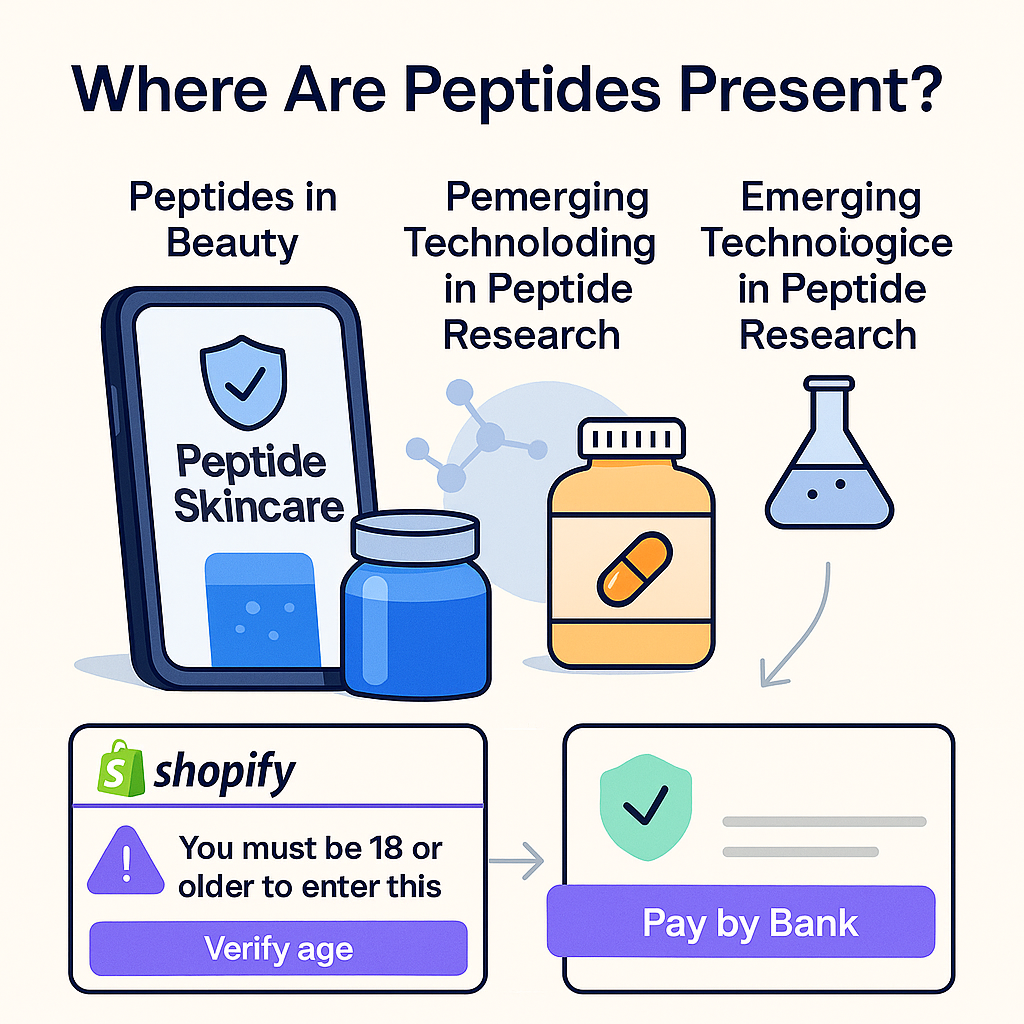
Peptides are present everywhere — in our skin, muscles, and the laboratories shaping modern health and wellness. These short amino acid chains are fundamental to life, impacting beauty, fitness, and medicine alike. Whether found in peptides skincare products or used for peptides for muscle growth, they bridge biology and biotechnology. Understanding where peptides are used helps consumers, researchers, and sellers navigate innovation responsibly.
This guide explores their presence across beauty, fitness, and research, ending with a practical section for sellers managing peptide payment processing on Shopify UK.
Introduction to Peptides: What They Are and Their Importance
Peptides are smaller versions of proteins, typically made up of 2–50 amino acids. Because of their size, they’re easier for the body to absorb and can act as biological messengers that influence processes such as collagen production, tissue repair, and muscle growth.
What Are Peptides Used For?
They’re found in cosmetics, supplements, and pharmaceuticals — improving skin texture, boosting recovery, and even supporting therapeutic research. Their versatility has made peptides an essential part of industries ranging from anti-aging skincare to sports science.
Peptides in Beauty: How They Work and Why They Matter
In skincare, peptides for skin are the foundation of many anti-aging and restorative formulas. They send signals that stimulate collagen and elastin — proteins that give the skin strength and elasticity.
How Peptides Work in Skincare:
- Signal peptides (like Matrixyl or Argireline) tell skin cells to produce more collagen.
- Carrier peptides (such as GHK-Cu) deliver trace minerals that aid healing and repair.
- Enzyme-inhibitor peptides prevent collagen degradation, preserving firmness and hydration.
Do Peptides Work?
Yes. Research shows that consistent use of peptide skincare can visibly improve hydration, firmness, and texture. The results depend on concentration, formulation stability, and product quality.
Why They Matter:
- Promote natural collagen regeneration.
- Strengthen the skin barrier.
- Offer visible anti-aging results without harsh synthetics.
With consumer interest growing in collagen peptides for skin, transparent labeling and evidence-based marketing are key to trust and retention.
Peptides in Bodybuilding: How They Work and Why They Matter
In sports and fitness, peptides play an equally vital role. Peptides for muscle growth stimulate natural processes that help the body recover, repair, and build lean tissue.
Common Types in Sports Use:
- Growth hormone-releasing peptides (GHRPs): Trigger natural GH production for muscle recovery.
- IGF-1 peptides: Support anabolic activity and cellular repair.
- Collagen peptides: Maintain joint flexibility and tendon resilience.
Peptides vs Steroids:
When comparing peptides vs steroids, peptides act by supporting internal hormone regulation rather than replacing it synthetically. This often results in fewer side effects and a more natural pathway for muscle growth.
Why They Matter:
- Reduce recovery time.
- Improve joint and tendon health.
- Provide a regulated alternative to steroids.
For athletes and brands alike, labeling and compliance with MHRA and EU guidelines remain critical, especially when marketing peptides as supplements or research products.
Emerging Technologies in Peptide Research
Peptide research has become one of the most promising fields in biotechnology. Scientists now design synthetic peptides tailored to specific biological goals — from skincare rejuvenation to drug delivery.
Key Innovations Include:
- Automated synthesis systems that improve precision and purity.
- AI-driven peptide modeling that predicts structure and behavior before lab testing.
- Nanocarrier delivery methods that boost peptide stability and absorption in skincare and medicine.
These advancements enable more effective formulations and targeted treatments. However, as the market grows, transparent labeling and ethical distribution are essential to maintain public trust.
Staying Compliant with Payments and Policy Challenges in Shopify UK
Sellers dealing with peptides — especially in the UK — must balance scientific opportunity with legal compliance. Many payment gateways label peptides as “high-risk,” restricting transactions even for legitimate sellers.
Key Challenges:
- Regulatory scrutiny: MHRA and EU compliance requirements.
- Payment restrictions: Shopify and other platforms flag peptides under restricted categories.
- Verification standards: Age and identity verification for buyers.
Wallid’s Pay-by-Bank provides a transparent and secure solution for peptide payment processing. It integrates KYC, age verification, and fraud prevention tools, ensuring sellers stay compliant while processing payments smoothly on Shopify UK.

