
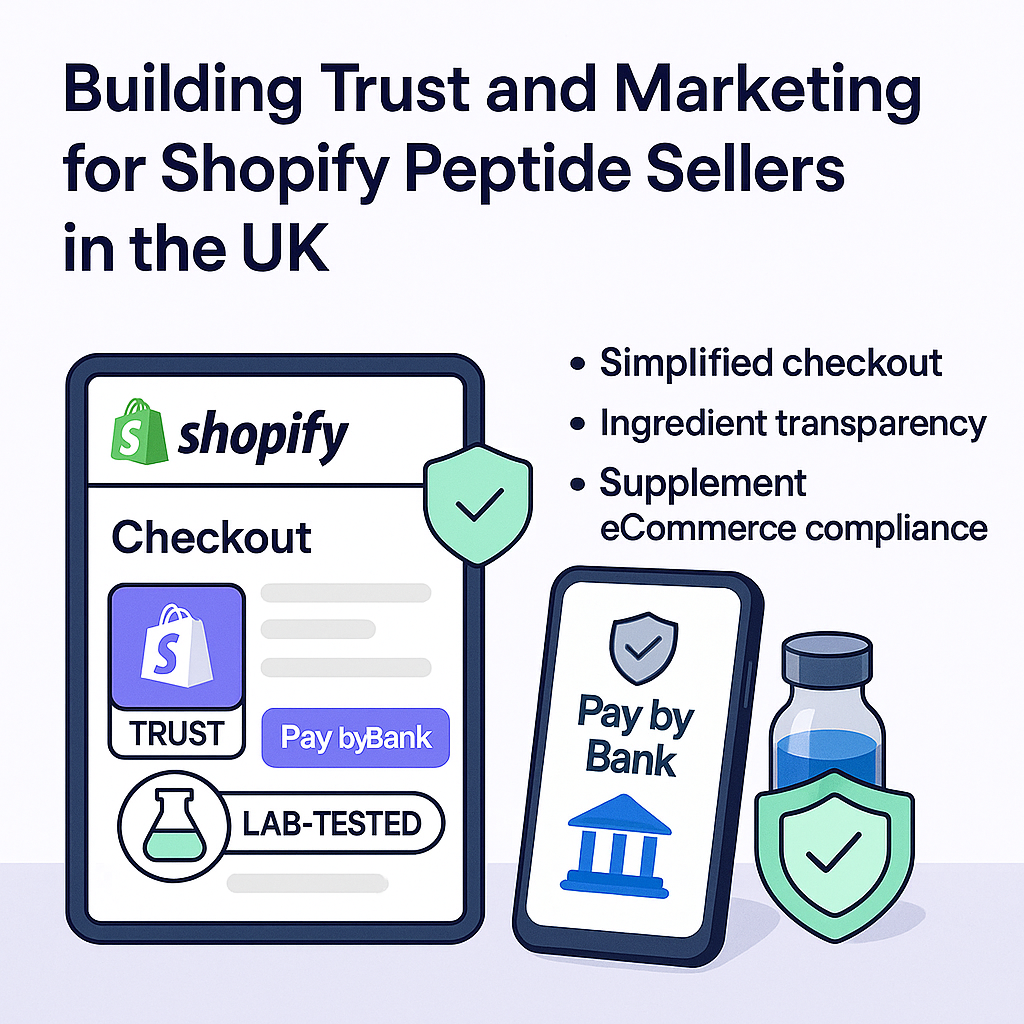
Peptide eCommerce is booming in the UK, but so is consumer scrutiny. Today’s buyers want ingredient transparency, clear ethical marketing, and secure checkout experiences that prove legitimacy.
For Shopify sellers, the ability to demonstrate trust is not just an advantage; it’s a requirement for long-term growth.
This guide explores how peptide brands can build credibility, ensure compliance, and market effectively in one of the most regulated supplement niches online.
For Shopify sellers, the ability to demonstrate trust is not just an advantage; it’s a requirement for long-term growth.
This guide explores how peptide brands can build credibility, ensure compliance, and market effectively in one of the most regulated supplement niches online.
Building Trust and Transparency Online
Transparency is the cornerstone of any successful supplement brand. Consumers are wary of misleading claims, especially in the peptide niche, which overlaps with medical and research-grade compounds.
To build confidence:
- Disclose sourcing origins — Include certificates of analysis and supplier credentials.
- Show ingredient traceability — Display purity percentages, test results, or third-party verifications.
- Use ethical copy — Avoid unverifiable medical statements and focus on science-backed data.
- Enable verified payments — Use methods like Pay-by-Bank to show legitimacy from checkout onward.
Marketing Strategies for Peptide Sellers
Peptide sellers face tight restrictions, but also unique opportunities. The key is combining compliance-first marketing with authority-building content.
Shopify Compliance and Supplement Regulations
Running a peptide or supplement store on Shopify requires alignment with UK and EU advertising and labeling laws. Avoid flagging or payment holds by following these principles:
- Label products as “for research use only” if applicable.
- Remove medical or therapeutic claims unless MHRA-approved.
- Include age and use disclaimers at checkout.
- Verify buyer region for restricted compounds.
Secure Payment Solutions for UK Sellers
A secure payment experience is not just about fraud prevention — it’s part of the trust narrative. Shopify sellers can boost both compliance and conversions by using:
- Pay-by-Bank for identity and age verification
- Direct bank authentication to meet PSD2 and FCA regulations
- Transparent checkout UX that reassures buyers
Action Plan for Trust-Based eCommerce
Building a trust-based Shopify peptide business means uniting transparency, compliance, and customer experience. Here’s a step-by-step plan to implement it:
1. Product and Label Transparency
Transparency starts at the product level. Publish third-party lab certificates, make purity data accessible, and be open about manufacturing origins. By showing this information upfront, sellers establish reliability with informed buyers and avoid skepticism that often surrounds supplement eCommerce.
Also, standardize ingredient names and batch test results so repeat buyers can compare quality over time. Consistency communicates integrity.
2. Compliance Alignment
Compliance is not a one-time effort — it’s a continuous discipline. Review MHRA and FCA guidance every quarter and keep product pages updated with the latest legal wording. Use clear disclaimers such as “for research use only” when applicable, and avoid unverified performance or medical claims.
Collaborate with compliance experts to ensure your marketing materials align with ASA and CAP codes, preventing Shopify payment disruptions or delisting issues.
3. Secure Payments and Checkout
Trust is reinforced at checkout. Integrate Wallid’s Pay-by-Bank to provide age verification, identity confirmation, and region-specific compliance checks, all before payment is processed.
Displaying Pay-by-Bank and SSL trust badges reassures customers that their transaction is safe and verified. This not only improves conversion rates but also signals that your brand prioritizes customer safety and compliance.
4. Customer Education
Education transforms compliance into credibility. Develop ongoing educational content, blogs, guides, and newsletters, explaining peptide safety, handling, and ethical research practices. Offer post-purchase compliance PDFs or FAQ pages that clarify intended product use.
By educating your audience, you strengthen brand authority while reducing refund risks from misinformation or misuse.
5. Long-Term Trust Building
Finally, long-term credibility relies on proactive engagement and transparency. Maintain open communication with customers through verified testimonials, transparent response to feedback, and consistent branding across all touchpoints.
Schedule annual audits of your compliance materials and customer data security systems to maintain alignment with evolving FCA and data protection laws. Demonstrate that your business doesn’t just follow rules — it leads with responsibility.