Blog

What are Peptides? Understanding their role, types, and relevance

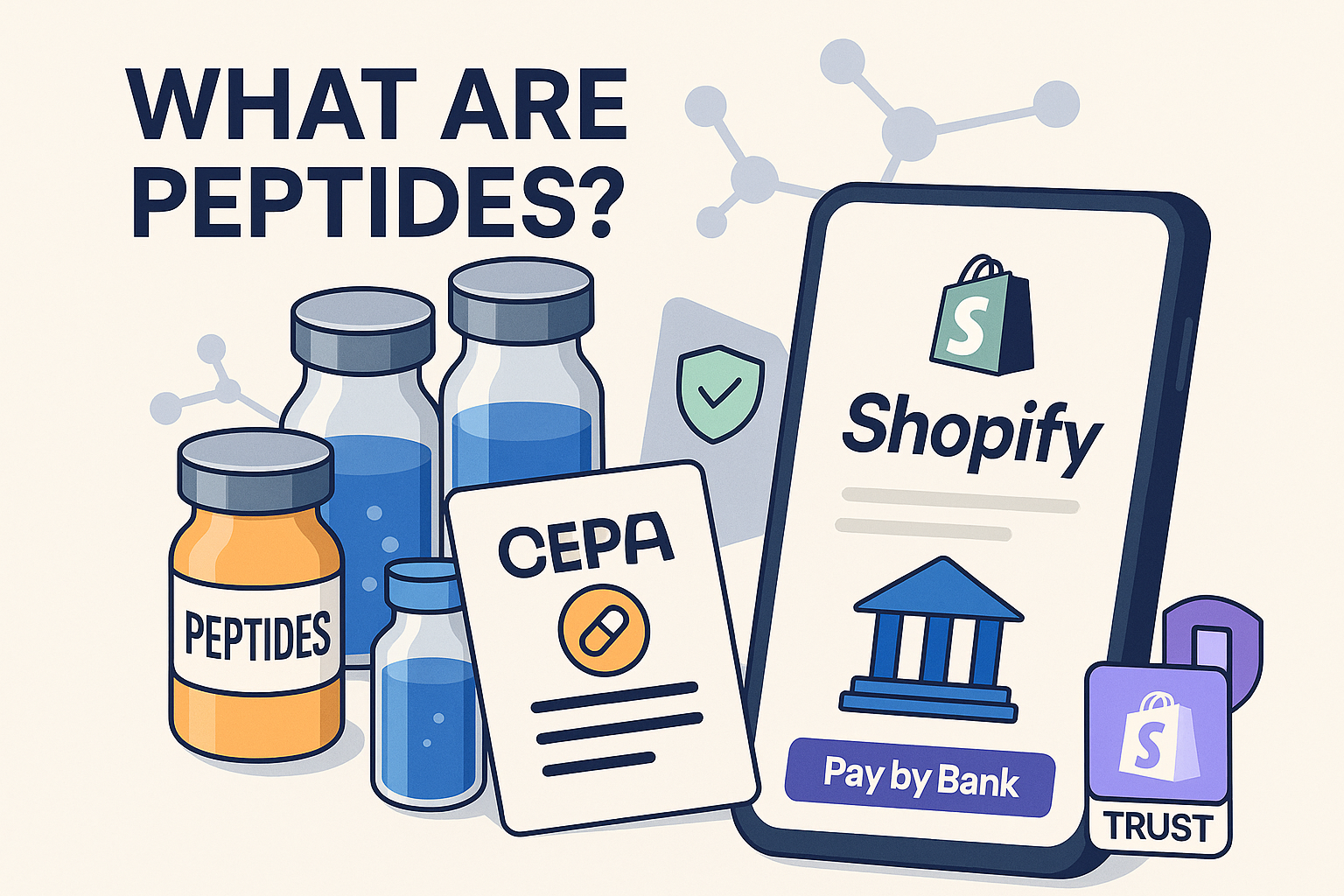
Illustration showing peptide vials, molecular structures, and Pay by Bank technology, representing how to buy peptides and understand peptide types safely.
Peptides are rapidly gaining attention across industries — from biotechnology and healthcare to cosmetics and sports nutrition. While they’ve become a buzzword, few understand what peptides actually are, how they function, and why certain types have regulatory or age restrictions.

This article provides a complete overview for sellers and researchers looking to navigate the peptide landscape confidently.

Key Takeaways:

  • Peptides are short amino acid chains essential for cell communication, tissue repair, and overall body function.
  • Different peptide types—signaling, hormonal, structural, and enzymatic—serve specific biological and commercial purposes.
  • Age restrictions apply to some peptides due to safety, potency, and regulatory classifications.
  • Collagen peptides dominate the market for their skin, joint, and wellness benefits.
  • Peptide sellers should follow UK and EU compliance rules, ensure transparency, and use secure checkout tools like Wallid.

Introduction to Peptides: What They Are and Their Importance

Peptides are short chains of amino acids, the same building blocks that form proteins. Unlike full-length proteins, peptides are smaller and frequently act as messengers or triggers in biological systems.
In the human body, peptides regulate vital processes including:
  • Cell communication
  • Tissue repair
  • Immune response
  • Metabolic regulation
Their bioactive nature makes them valuable in multiple fields — from pharmaceutical R&D to anti-aging skincare and sports performance products.
Peptides are increasingly featured in research compounds, nutraceuticals, and cosmetic formulas. Understanding their classification helps sellers and consumers identify legitimate, compliant uses.

Types of Peptides: Exploring Different Classifications

Peptides can be grouped by their biological function or commercial use case. Below are key categories:
Type Function / Example Common Applications
Signaling Peptides Act as messengers between cells (e.g., GHK-Cu) Skin rejuvenation, tissue regeneration
Hormonal Peptides Regulate body processes (e.g., insulin, growth hormone) Endocrinology, metabolism research
Enzymatic Peptides Influence enzymatic reactions Drug development, metabolic therapy
Structural Peptides Support tissue strength and elasticity Collagen-based products
Antimicrobial Peptides Defend against pathogens Wound care, medical applications

Note: In commercial and research contexts, accurate labeling is critical — especially when peptides mimic natural hormones or are intended for in-vitro use only.

Peptides and Age Restrictions: Understanding the Reasons

Certain peptides are subject to age-based purchase or use restrictions, particularly in sports or cosmetic settings.
Reasons include:
  1. Safety Concerns — Peptides can influence growth factors and hormone regulation, which may not be safe for younger users.
  2. Efficacy and Regulation — Some peptides are only tested or approved for adult physiology.
  3. Legal Classification — In the UK and EU, peptides with systemic or hormonal effects may be restricted as medicinal products.
Sellers must comply with regulations, such as those of the MHRA in the UK or equivalent national agencies in the EU, and clearly state the intended use (e.g., “for research purposes only”) and any applicable age limitations.
Did you know? Wallid’s Pay-by-Bank checkout automatically verifies customer age and region — helping peptide sellers stay compliant with UK and EU regulations.

Collagen Peptides: Rising Stars in the Market

Among all peptide types, collagen peptides have become a dominant force in the consumer market.

Why They Matter

Collagen peptides are hydrolyzed forms of collagen, making them easier to absorb. Their popularity is tied to:
  • Improved skin elasticity and hydration
  • Enhanced joint mobility
  • Growing wellness and beauty crossover appeal

The UK Market Perspective

In the UK, collagen peptides are widely sold as functional supplements and skincare enhancers, driving substantial consumer demand. E-commerce sellers should ensure their supply chain adheres to purity and traceability standards, as consumers increasingly seek verified, science-backed products.

What Sellers Must Know

For peptide sellers — especially those operating online — transparency and compliance are critical.
By combining regulatory transparency with efficient checkout and verification systems, sellers can build trust and long-term brand credibility in a growing yet sensitive market.

Speakable Summary

This article explains what peptides are, how they function in biological and commercial contexts, and why certain peptides are subject to regulatory or age restrictions. It highlights the rise of collagen peptides and outlines what peptide sellers must know about compliance, transparency, and safe marketing. Wallid empowers sellers with secure Pay-by-Bank technology, automated age and identity verification, and compliance tools designed for high-trust markets like peptides and research products.

Ready to Sell Peptides Safely and Compliantly?

Wallid helps peptide and research product sellers build trust with secure Pay-by-Bank payments, automated age and identity verification, and full regulatory compliance across the UK and EU.

Book a Free Demo

Learn how Wallid can help you accept payments confidently in high-trust, regulated industries.

FAQ

What exactly are peptides?

Peptides are short chains of amino acids that act as biological messengers and building blocks. They participate in cell communication, tissue repair, immune response and many other physiological processes.

Are peptides legal to sell in the UK?

Yes—many peptides can be sold legally in the UK when labelled correctly (for example, as research-use-only or as supplements). However, peptides that are classified as medicinal products or that make therapeutic claims require MHRA approval and must follow medicine regulations.

Why do peptides have age restrictions?

Some peptides can affect growth factors, hormones or systemic physiology; because of these potential effects and limited safety data for minors, suppliers and regulators often restrict their sale or recommended use to adults.

What are collagen peptides used for?

Collagen peptides are hydrolysed collagen fragments used in supplements and topical formulations to support skin elasticity, hydration and joint health. They’re popular in beauty and wellness products due to ease of absorption and supportive clinical evidence for certain outcomes.

How can Wallid help peptide sellers?

Wallid can help by providing secure Pay-by-Bank payments, age/identity verification, and checkout tools that support compliance and reduce fraud—helping sellers operate transparently and meet regulatory expectations.

Expert Note:
Written by a Wallid Content Specialist focusing on compliance and eCommerce operations in the research and peptide markets. This article is part of Wallid’s educational series helping sellers navigate safe, compliant payment and verification solutions.

research peptides insights