Blog

How to Avoid Payment Processor Shutdowns in High-Risk UK or Europe Ecommerce

Futuristic digital payment infrastructure concept showing Pay by Bank technology protecting a high-risk ecommerce business from payment processor shutdowns, frozen payouts, chargebacks, and account terminations through secure direct bank payments.
For high-risk ecommerce businesses, payment processor shutdowns can be just as damaging as losing a major supplier or advertising channel.
Merchants selling peptides, CBD products, supplements, and similar products often face stricter scrutiny from payment providers. A processor may freeze payouts, impose reserves, or terminate an account if it believes the business presents elevated risk.
Understanding why this happens is the first step toward reducing disruption.

Key Takeaways:

  • High-risk ecommerce merchants selling products such as peptides, CBD, and supplements face an increased risk of payment processor reviews, frozen payouts, reserve requirements, and account terminations.
  • Common triggers for payment processor shutdowns include high chargeback rates, compliance issues, unclear product claims, missing business documentation, and sudden increases in transaction volume.
  • Switching to another card processor does not always solve the underlying problem because many providers rely on similar card-network infrastructure, underwriting standards, and risk-management models.
  • Pay by Bank provides an alternative payment rail that allows customers to authorise payments directly from their bank account, reducing dependence on traditional card-processing ecosystems.
  • Wallid's platform-agnostic Pay by Bank API helps high-risk ecommerce businesses diversify payment acceptance while maintaining their existing ecommerce platforms and operational workflows.
This article explains why high-risk ecommerce payment processors shut down merchant accounts, the most common risk factors that trigger reviews or terminations, and how merchants can reduce dependence on traditional card-processing infrastructure through stronger compliance practices and alternative payment methods such as Pay by Bank.

Why Do High-Risk Ecommerce Payment Processors Shut Down Merchant Accounts?
Payment processors may shut down merchant accounts when factors such as business category, product claims, chargeback levels, compliance documentation, or transaction patterns exceed their risk tolerance.
For many merchants, the challenge is not poor business performance but reliance on payment infrastructure that can change its risk policies at any time.

Common Reasons for Payment Processor Shutdowns

High-Risk Product Categories

Certain sectors receive greater scrutiny, including:
  • CBD products
  • Peptides
  • Supplements
  • Nutraceuticals
  • Age-restricted products
Even approved merchants may face reviews if processor policies change.

Product Claims and Compliance Issues

Claims that suggest medical, therapeutic, or disease-related benefits can increase risk exposure.
Processors often review product descriptions, marketing materials, and supporting documentation when assessing merchants.

Chargebacks and Refunds

High chargeback ratios remain one of the most common reasons for account restrictions.
Processors also monitor:
  • Refund rates
  • Customer complaints
  • Delivery disputes
  • Subscription-related issues

Missing Business Documentation

Incomplete websites can trigger compliance concerns.
Important information includes:
  • Refund policies
  • Shipping policies
  • Contact details
  • Legal entity information
  • Certificates of Analysis (COAs), where applicable

Sudden Growth in Processing Volume

Rapid increases in transaction volume may trigger additional reviews, particularly if the growth appears unusual compared to historical activity.

Why Switching Processors Often Doesn't Solve the Problem

Many merchants respond to an account shutdown by moving to another processor.
However, most card processors rely on similar card-network infrastructure, underwriting standards, and risk-management frameworks.
As a result, the same issues that caused problems with one provider may eventually reappear with another.
On this page

How Pay by Bank Can Reduce Dependency on Card Processors

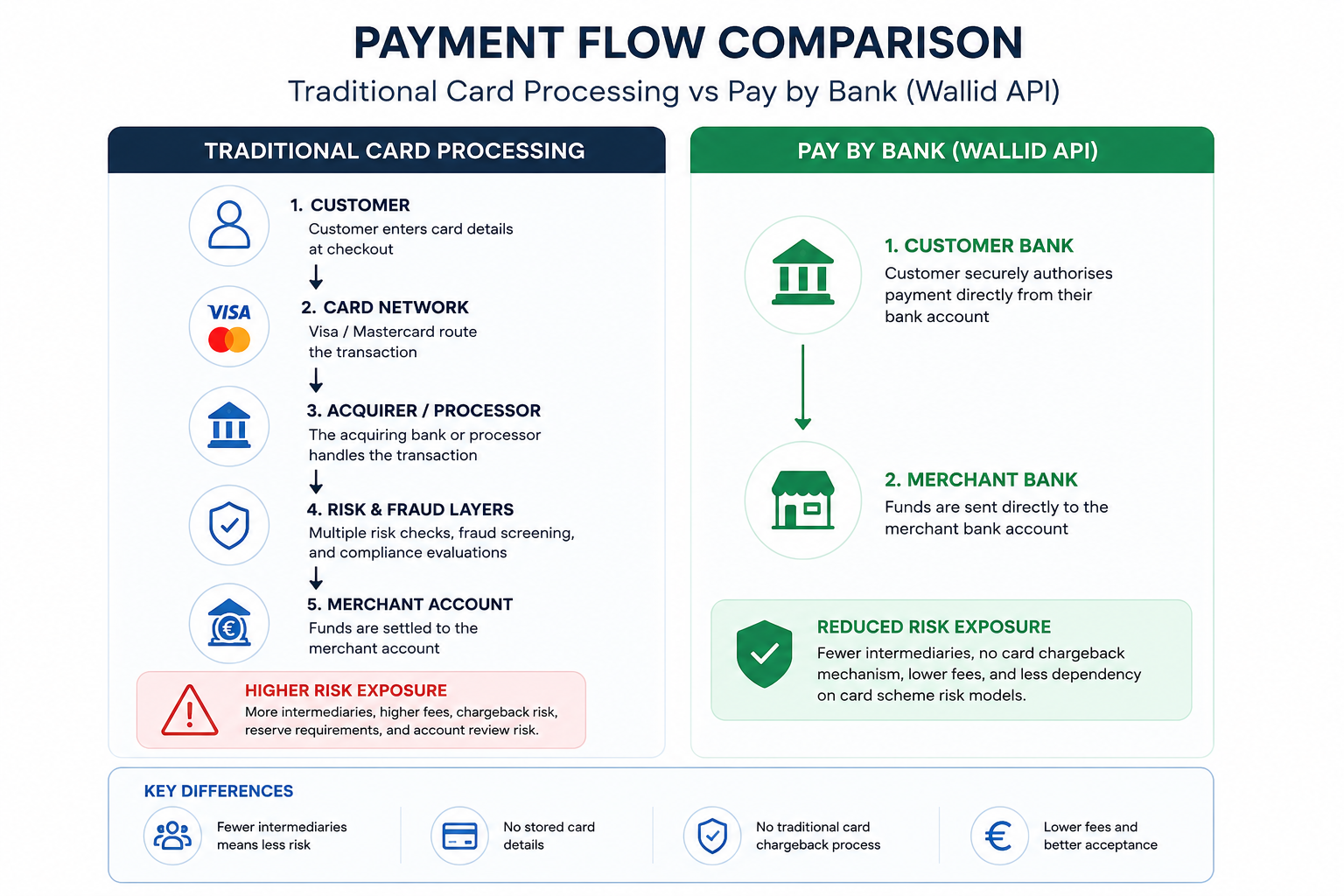
Pay by Bank allows customers to authorise payments directly from their bank account rather than using card networks.
For high-risk merchants, this offers several advantages:
  • Reduced dependence on card-processing infrastructure
  • No traditional card chargeback mechanism
  • Fewer intermediaries involved in the payment flow
  • Alternative payment acceptance alongside existing methods

Don't Wait for a Payment Processor Shutdown

High-risk ecommerce merchants selling peptides, CBD products, supplements, and other regulated goods often face frozen payouts, reserve requirements, and account reviews. Wallid helps businesses diversify payment acceptance through Pay by Bank infrastructure, reducing dependence on traditional card-processing ecosystems.

Talk to Wallid

Discover how Pay by Bank can help your business reduce payment risk, diversify checkout options, and build a more resilient payment infrastructure.

Solutions such as the Wallid API enable merchants to add Pay by Bank functionality without rebuilding their ecommerce platform.
On this page

Traditional Card Processing vs Pay by Bank for High-Risk Ecommerce

The table below highlights some of the operational differences between traditional card-processing infrastructure and Pay by Bank payments.
Operational Risk Traditional Card Processor Wallid Pay by Bank API
Dependence on card networks High None
Exposure to card-scheme risk policies High Lower
Traditional chargeback mechanism Yes No traditional card chargeback process
Risk of payout freezes Higher exposure Reduced dependence on card-processing restrictions
Exposure to rolling reserves Common in high-risk sectors Not tied to card-network reserve models
Number of payment intermediaries Multiple Fewer
Risk of processor policy changes affecting payments High Reduced dependence on card processors
Customer payment method Debit or credit card Direct bank account authorisation
Payment diversification value Limited to card rails Adds an alternative payment rail
Integration approach Processor-specific Platform-agnostic API integration
While Pay by Bank does not eliminate compliance obligations or operational risk, it can help merchants diversify payment acceptance and reduce reliance on a single payment ecosystem.
On this page

Payment Processor Shutdown Prevention Checklist

To reduce risk exposure:
  • Avoid medical or therapeutic product claims
  • Publish clear refund and shipping policies
  • Make COAs and supporting documentation available where relevant
  • Display legal business information prominently
  • Maintain responsive customer support
  • Monitor chargeback and refund rates
  • Diversify payment methods where possible
While no payment method guarantees immunity from reviews, strong compliance and operational transparency can significantly reduce risk.

Conclusion

Payment processor shutdowns are a common challenge for high-risk ecommerce businesses across the UK and Europe.
Rather than relying entirely on a single card processor, merchants should focus on compliance, transparency, and payment diversification. Adding alternative payment rails such as Pay by Bank through Wallid can help reduce dependence on traditional card infrastructure and improve long-term resilience.

Frequently Asked Questions

Why do high-risk payment processors shut down merchant accounts?

Payment processors may shut down merchant accounts when factors such as business category, product claims, chargeback levels, compliance documentation, or transaction patterns exceed their risk tolerance. High-risk sectors such as CBD, peptides, and supplements often receive greater scrutiny than standard ecommerce businesses.

What is considered a high-risk ecommerce business?

A high-risk ecommerce business typically operates in industries that experience elevated chargeback rates, increased regulatory scrutiny, or greater fraud exposure. Examples include CBD products, peptides, supplements, nutraceuticals, and certain wellness products.

What is a frozen payout?

A frozen payout occurs when a payment processor temporarily holds merchant funds while conducting a risk review, compliance investigation, or reserve assessment. During this period, merchants may be unable to access some or all of their processed revenue.

Can chargebacks cause account termination?

Yes. Excessive chargebacks are one of the most common reasons processors restrict, suspend, or terminate merchant accounts. High chargeback ratios often signal elevated risk to payment providers and card networks.

Why do payment processors request COAs and laboratory reports?

Processors may request Certificates of Analysis (COAs), laboratory reports, and other supporting documentation to verify product quality, compliance, and legitimacy. This is particularly common for supplements, CBD products, and peptides.

Does switching to another payment processor solve the problem?

Not always. Many processors rely on similar card-network infrastructure, underwriting standards, and risk-management frameworks. As a result, merchants may encounter the same challenges even after moving to a different provider.

Is Pay by Bank useful for high-risk ecommerce businesses?

Yes. Pay by Bank provides an alternative payment rail that reduces dependence on traditional card-processing infrastructure while allowing customers to authorise payments directly from their bank account. This can help merchants diversify payment acceptance and reduce reliance on a single payment ecosystem.

Does Pay by Bank eliminate compliance requirements?

No. Merchants must still comply with applicable regulations, maintain accurate business information, provide clear policies, and ensure their products and marketing materials meet legal requirements. Pay by Bank is not a substitute for compliance.

Can Wallid be integrated without changing ecommerce platforms?

Yes. Wallid offers a platform-agnostic Pay by Bank API that can be integrated into existing ecommerce environments without requiring merchants to migrate away from their current platform or rebuild their checkout experience.

How can merchants reduce the risk of payment processor shutdowns?

Merchants can reduce risk by maintaining clear refund and shipping policies, publishing relevant compliance documentation, avoiding misleading product claims, monitoring chargebacks, providing responsive customer support, and diversifying payment infrastructure where appropriate.

Expert Note:
Written by a Wallid Content Specialist focused on high-risk ecommerce payments, payment infrastructure, and Pay by Bank technology across the UK and Europe. This article is part of Wallid's educational series helping merchants understand payment processor shutdowns, frozen payouts, chargeback-related risks, and strategies for reducing dependence on traditional card-processing infrastructure through payment diversification and Pay by Bank solutions.

API