Secure & instant Pay-by-Bank for Shopify merchants.
Company
Blog

Advertising Compliance for Peptide Sellers (ASA, CAP, Meta, Shopify)

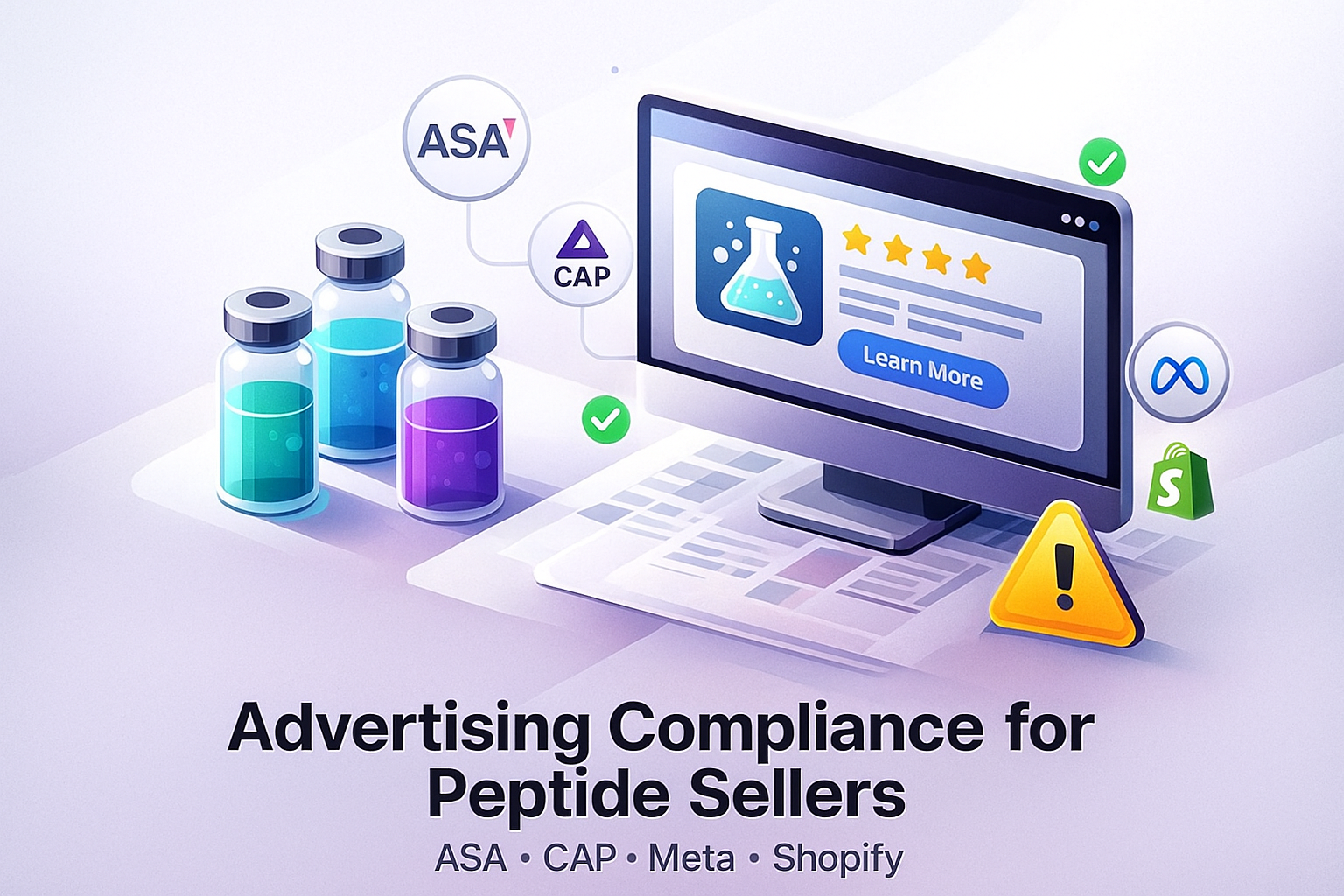
Vector illustration showing peptide vials next to ASA, CAP, Meta, and Shopify advertising compliance icons, with a computer screen displaying a safe research-use ad and warning symbol.
Marketing peptides in the UK requires a strict, research‑only approach. Regulators and major platforms treat peptides as high‑risk substances, and any suggestion of human use, health improvement, or performance enhancement can trigger removals, disapprovals, and account bans. This streamlined guide explains how to advertise responsibly while meeting ASA, CAP, Shopify, Meta, and Google requirements.

Key Takeaways:

  • Peptide advertising in the UK must avoid all health, performance, or biological claims due to CAP Code and ASA rules.
  • Shopify, Meta, and Google apply additional restrictions, preventing direct advertising and prohibiting any suggestion of human consumption.
  • Using technical, research-focused descriptions and clear disclaimers reduces enforcement risks across platforms.
  • The Online Safety Act requires sellers to remove content that could encourage misuse, including testimonials or dosing guidance.
  • Consistent research-only framing, neutral imagery, and documented compliance help maintain payment, store, and ad account stability.

UK Advertising Rules: What You Must Know

How the CAP Code categorises peptides

Under the CAP Code, a product becomes a medicine if the advertising implies any biological effect on the human body. Peptides fall into this category as soon as marketing language hints at performance, wellness, or physiological outcomes.

Claims that must not appear

Claim type Examples that breach rules
Performance or physique benefits Improves muscle growth, boosts recovery
Health or wellness effects Supports immunity, enhances sleep
Anti-ageing or healing Reduces inflammation, helps tissue repair
Athlete or fitness linkage Used by athletes, training enhancement
Consumption guidance Any dosing, injection, or ingestion language

What you can safely include

Allowed content Purpose
Chemical identifiers CAS numbers, molecular data
Purity and lab information Certificates of Analysis (CoA), SDS
Research-only framing Laboratory-use-only statements
Safety notes Handling and storage guidance
Clear disclaimers Non-medical, not for human consumption

Platform‑Specific Restrictions

Shopify

Shopify prohibits listings that imply therapeutic, enhancement, or drug‑like effects.
Shopify compliance checklist
  • No benefit‑style wording on product pages
  • No dosing or usage instructions
  • Neutral, non‑fitness‑oriented imagery
  • Clear non‑consumption disclaimers
  • Verification documents available when requested

Meta (Facebook and Instagram)

Meta does not permit ads for peptides. However, businesses may promote educational or regulatory content.
Safe Meta ad targets
  • Research or compliance guides
  • Educational pages on lab‑related topics
  • Industry news articles
Ads should direct users to information pages rather than product listings.

Google Ads

Google restricts advertising for unapproved pharmaceuticals and substances associated with consumption.
Safer Google Ads approach
  • Promote blog or educational content only
  • Ensure landing pages are free of health‑related language
  • Avoid linking directly to product pages

Online Safety Act UK: Content Responsibilities

The Online Safety Act requires platforms and businesses to avoid hosting content that could encourage harmful behaviour.
Content to avoid
  • Mixing, dosing, or injection instructions
  • Testimonials describing physical outcomes
  • Messaging aimed at minors
  • Body‑transformation imagery or narratives
Recommended safeguards
  • Remove comments mentioning consumption
  • Use age‑appropriate access controls where relevant
  • Maintain consistent research‑only wording in all content

Marketing Peptides Responsibly

Recommended approach

Checklist for compliant marketing
  • Use scientific naming conventions
  • Keep tone neutral and factual
  • Display disclaimers prominently
  • Provide SDS and CoA documentation
  • Write for researchers, not consumers

Practices that lead to violations

Problematic content Why it breaches rules
Descriptions of biological effects Implies medicinal or therapeutic function
Before-and-after photos Suggests expected physical outcomes
Athlete or fitness associations Creates implied performance enhancement claims
Usage instructions Facilitates human consumption or administration
External links to forums Encourages unsafe or off-label behaviour

Compliance Signals That Reduce Account Risk

Strong compliance signals help reduce platform enforcement actions.
Key structural signals
  • Research‑use‑only statements displayed consistently
  • Neutral, non‑implied‑use photography
  • Scientific categorisation and product labelling
  • Removal of user reviews implying effects
  • Clear separation between educational content and product listings
Platform considerations
  • Shopify: avoid drug‑like wording
  • Meta: promote content only
  • Google: no restricted terms on landing pages

Ready to Advertise Peptides Safely and Compliantly?

Wallid helps peptide and research-use sellers stay compliant with secure Pay-by-Bank, automated age & identity verification, and checkout tools designed for restricted-product merchants on Shopify UK.

Book a Free Demo

See how Wallid adds compliance, traceability, and trust to every peptide transaction.

FAQ

Are peptides legal to sell in the UK?

Yes. Peptides can be legally sold for laboratory research use only. They cannot be advertised, labelled, or described as suitable for human consumption or therapeutic use.

Can I reference scientific studies on product pages?

You can mention research context or cite scientific literature, but you must not imply that your products deliver the same physiological or wellness outcomes shown in studies.

Can peptides be advertised on Meta or Google?

No. Meta and Google prohibit direct advertising of peptides. Only neutral educational content may be promoted, and ads cannot link directly to product pages.

Do I need disclaimers on every product page?

Yes. Clear, consistent disclaimers such as “For laboratory research use only. Not for human consumption.” must appear on every product listing and relevant site sections.

Can I use athlete images or before/after photos?

No. Fitness imagery or transformation photos imply performance or cosmetic benefits and violate ASA and CAP rules, as well as Shopify's prohibited products policy.

Can I include dosing, mixing, or application instructions?

No. Any human-use instruction is prohibited and will trigger enforcement under ASA/CAP, Shopify restrictions, Meta policies, and the Online Safety Act’s harm-prevention duties.

Can customers leave reviews describing their results?

No. User-generated content that implies biological or performance effects must be removed. These statements act as indirect claims and violate ASA and platform policies.

Expert Note:
Written by a Wallid Content Specialist focused on ASA/CAP compliance, Shopify restricted-product policies, and platform-safe marketing for research-use peptides. This article is part of Wallid’s educational series helping merchants reduce ad bans, avoid false claims, and maintain compliant Pay-by-Bank checkout flows.

research peptides