Blog

How to Recover Abandoned Checkouts on AI-Built Stores

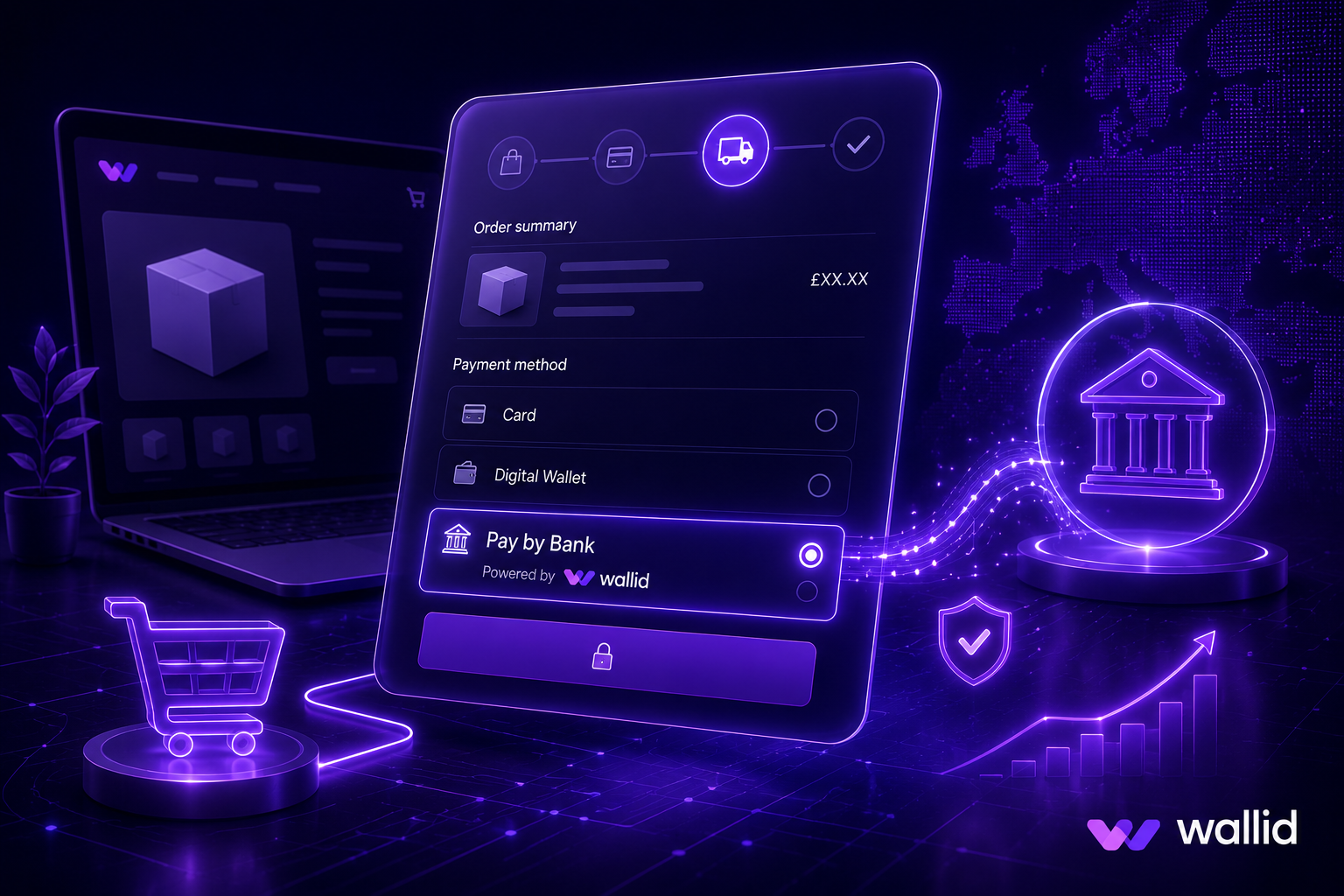
Futuristic AI-built ecommerce checkout interface highlighting Pay by Bank powered by Wallid with secure Open Banking payments and checkout conversion optimisation.
On this page
Launching an online store with an AI-assisted website builder is faster than ever. However, getting visitors to complete a purchase is a different challenge. Many merchants discover that while traffic is growing, completed orders are not.
This article explains why customers abandon checkout on AI-built stores and how merchants can recover lost sales by improving the checkout experience. It covers common sources of friction, the role of payment methods in conversion, and practical steps you can take to simplify checkout and increase completed purchases.

Key Takeaways

  • Most abandoned checkouts are caused by unnecessary friction rather than a lack of customer interest.
  • Simpler checkout flows, guest checkout, and mobile optimisation can significantly improve conversion rates.
  • Offering multiple trusted payment methods helps more customers complete their purchases.
  • Pay by Bank provides an additional payment option that can reduce payment friction for eligible customers in the UK and Europe.
  • Regularly analysing checkout data helps identify where customers abandon the buying journey.
  • Wallid enables merchants to add Pay by Bank through an API-friendly solution as part of a broader payment strategy.
A significant proportion of lost sales happen during checkout. Customers add products to their basket, begin the payment process, and then leave without completing their purchase. Fortunately, many of these abandoned checkouts can be recovered by improving the checkout experience rather than increasing advertising spend.
The best way to recover abandoned checkouts is to remove friction from the payment process. Simplifying checkout, reducing unnecessary form fields, offering trusted payment methods, and providing alternatives such as Pay by Bank can increase checkout completion and reduce the number of customers who abandon their purchase.

Why AI-Built Stores Lose Sales

AI tools make building an online store easier, but they cannot automatically optimise the checkout experience.
Many stores launch with checkout pages that contain unnecessary friction, including:
  • Too many form fields
  • Slow checkout pages
  • Limited payment options
  • Unexpected fees
  • Mobile usability issues
  • Lack of customer trust signals
These issues may seem minor individually, but together they create enough hesitation for customers to leave before completing payment.

Common Checkout Friction

Understanding why customers abandon checkout helps prioritise improvements.
Checkout Friction How It Affects Conversion How to Reduce It
Mandatory account creation Creates unnecessary steps before payment, causing some shoppers to leave. Offer guest checkout and allow account creation after purchase.
Long checkout forms Too many required fields increase abandonment, especially on mobile devices. Request only essential customer information.
Unexpected fees Shipping costs or taxes appearing late often cause customers to abandon checkout. Display total costs as early as possible.
Limited payment methods Customers may leave if their preferred payment option isn't available. Support multiple trusted payment methods, including cards, digital wallets, and Pay by Bank.
Slow checkout performance Delays reduce trust and increase the likelihood of customers leaving before paying. Optimise page speed and minimise unnecessary scripts.
Poor mobile experience Small forms and difficult navigation create friction for mobile shoppers. Design a responsive, mobile-first checkout.
Low trust signals Customers hesitate if the checkout appears unfamiliar or insecure. Use HTTPS, display recognised payment methods, and provide clear security messaging.
Many of these improvements require only small changes but can have a measurable effect on conversion.

How Payment Methods Affect Checkout Conversion

Payment methods influence how comfortable customers feel when completing a purchase.
Some shoppers prefer paying by card, while others trust digital wallets or bank payments. Offering suitable payment options reduces the chance that customers leave because their preferred payment method is unavailable.
Payment Method Customer Experience Impact on Checkout Conversion
Credit & Debit Cards Widely recognised and familiar but requires manual card entry. High conversion when combined with a fast, secure checkout.
Digital Wallets
(Apple Pay, Google Pay)
One-tap payments with stored credentials on supported devices. Often improves mobile checkout completion by reducing payment steps.
PayPal Trusted by many shoppers and allows payment without entering card details directly on the store. Can increase buyer confidence, particularly for first-time customers.
Buy Now, Pay Later (BNPL) Offers instalment payments for eligible purchases. May improve conversion for higher-value orders where financing is attractive.
Pay by Bank Customers securely authenticate directly with their bank using Open Banking. Adds another trusted payment option that can reduce checkout friction and support higher completion rates for UK and European merchants.
Rather than replacing existing payment methods, adding another trusted option can improve overall checkout completion by giving customers more choice.

Simplified Checkout Flows Convert Better

The most effective checkout experiences minimise decision-making.
Consider these best practices:
  1. Allow guest checkout.
  2. Keep checkout to as few steps as possible.
  3. Display delivery costs early.
  4. Show security and payment trust indicators.
  5. Optimise the experience for mobile devices.
  6. Save customer information where appropriate.
  7. Reduce distractions on the payment page.
Every additional click or decision creates another opportunity for customers to leave.
On this page

Can Pay by Bank Improve Checkout Completion?

Pay by Bank allows customers to authorise payments directly from their bank account using secure Open Banking technology.
For some merchants, adding Pay by Bank alongside existing payment methods can reduce checkout friction by:
  • Offering an alternative to card payments
  • Avoiding card entry for eligible customers
  • Reducing payment processing costs
  • Lowering chargeback exposure
  • Providing another trusted way to pay
For merchants operating in the UK and Europe, Pay by Bank may be particularly attractive where customers are already familiar with Open Banking payments.

Want to Improve Checkout Conversion?

Recovering abandoned checkouts isn't just about attracting more visitors—it's about giving customers a faster, simpler way to pay. Discover how Pay by Bank can complement your existing payment methods and support a smoother checkout experience for customers across the UK and Europe.

Talk to the Wallid Team

Learn how Wallid helps merchants add Pay by Bank through an API-friendly solution designed for modern ecommerce and AI-built stores.

Solutions such as Wallid provide merchants with an API-friendly way to offer Pay by Bank as part of a broader payment strategy rather than replacing traditional card payments.
On this page

How to Improve Checkout Conversion

Improving checkout conversion is an ongoing process rather than a one-time task.
Follow these steps.

1. Measure Where Customers Drop Off

Use your analytics platform to identify exactly where customers abandon checkout.
Look for patterns across:
  • Mobile devices
  • Desktop devices
  • Payment methods
  • Countries
  • Browsers
Knowing where customers leave makes optimisation much more effective.

2. Remove Unnecessary Form Fields

Ask only for information that is genuinely required to complete the purchase.
Every additional field increases completion time and introduces more opportunities for abandonment.

3. Offer Trusted Payment Methods

Customers should recognise at least one payment method they already trust.
Depending on your audience, this may include:
  • Card payments
  • Digital wallets
  • Pay by Bank
Offering multiple payment options helps accommodate different customer preferences.

4. Optimise for Mobile

Many purchases now begin and finish on smartphones.
Ensure that:
  • Buttons are easy to tap.
  • Forms are simple to complete.
  • Payment pages load quickly.
  • Text remains readable without zooming.

5. Reduce Surprises

Unexpected delivery costs, taxes, or additional fees are among the most common reasons for checkout abandonment.
Display total costs as early as possible.

6. Test Your Checkout Regularly

Walk through your checkout as if you were a customer.
Ask yourself:
  • Is every step necessary?
  • Can anything be removed?
  • Does payment feel trustworthy?
  • Is the experience fast?
Small improvements made consistently often produce better long-term results than large redesigns.
On this page
example

Example

Imagine an online retailer that launches an AI-built store and notices that many customers reach the payment page but do not complete their purchase.
After reviewing analytics, the merchant:
  • removes mandatory account creation,
  • simplifies the checkout form,
  • optimises the experience for mobile devices,
  • introduces an additional Pay by Bank payment option alongside existing card payments.
Although traffic remains unchanged, more customers successfully complete checkout because the purchasing experience becomes simpler and offers greater payment flexibility.
On this page

Checkout Optimisation Checklist

Use this checklist to review your checkout.

Checkout Optimisation Checklist

Use this checklist to identify common opportunities to reduce checkout abandonment and improve conversion on your AI-built store.

  • Offer guest checkout to minimise barriers for first-time customers.
  • Keep checkout forms short and request only essential information.
  • Display shipping costs, taxes, and total order value before the final payment step.
  • Support multiple trusted payment methods, including cards, digital wallets, and Pay by Bank.
  • Optimise the checkout experience for mobile devices.
  • Improve checkout speed by removing unnecessary scripts and delays.
  • Display security indicators and trusted payment logos to build customer confidence.
  • Review checkout analytics regularly to identify where customers abandon the payment journey.

Frequently Asked Questions

Why do customers abandon checkout?

The most common reasons are unexpected costs, lengthy checkout forms, slow pages, limited payment options, and a lack of trust.

How can I improve checkout conversion?

Simplify your checkout, optimise for mobile, remove unnecessary steps, display costs early, and offer trusted payment methods.

Does guest checkout reduce abandonment?

In many cases, yes. Allowing customers to buy without creating an account removes unnecessary friction and can increase completed purchases.

Can payment methods affect conversion rates?

Yes. Offering payment methods that customers recognise and trust can reduce hesitation and improve checkout completion.

What is Pay by Bank?

Pay by Bank is an Open Banking payment method that lets customers authorise payments directly from their bank account.

Is Pay by Bank suitable for AI-built stores?

Yes. Merchants can add Pay by Bank alongside existing payment methods to offer customers more choice at checkout.

How often should I review checkout performance?

Review checkout metrics regularly, especially after redesigns, new payment integrations, or major marketing campaigns.

How can Wallid help improve checkout conversion?

Wallid enables merchants to offer Pay by Bank as an additional payment option, helping diversify payment acceptance and reduce checkout friction for eligible customers.

Expert Note
This article was written by a Wallid Content Specialist with expertise in ecommerce payments, Open Banking, and checkout optimisation. It is part of Wallid's educational AI Commerce series, helping merchants who build websites and online stores with AI understand how payment methods, checkout design, and Pay by Bank can work together to improve conversion across the UK and Europe.

AI